
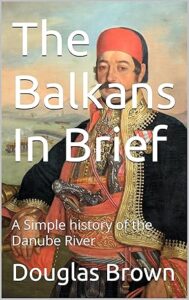
 Several days into an expensive cruise down the Danube River, I realize I was still confused as to what the heck was going on in the places we were visiting. The history and culture of the region are so fractured, and so often hastily reassembled from the broken shards, that is hard to make sense out of it if you are genuinely trying to do so. Even Winston Churchill is reputed to have referred to the area as “producing more history than it can locally consume”. That being the case, one cannot fault your tour guide, who has only a couple of hours with you and many sights to include in their commentary. At best they have time only to convey only the key points of that complex history to the extent that it had an immediate impact on the city you are then visiting.
Very few English-speaking visitors will have any background in the history and culture of Central Europe, because the region is usually treated as a minor and usually annoying tangent in the overall sweep of western European history. Emigrant communities are usually not large enough in any English-speaking countries for this information to be obtained by osmosis through casual contact. Going directly to the source requires not only learning how to read the Cyrillic alphabet; once you have it deciphered, the words are still in the somewhat obscure Serbo-Croatian language. Now you must translate that too. Few of us are equipped (or industrious enough) for that.
If you are just interested in artworks for art’s sake, or if you enjoy seeing the beautiful furnishings in a palace without much interest in who lived there or why they don’t anymore, that can be enough. For myself, I view tourism as an opportunity to learn about, understand a little of, and appreciate the region I am visiting. Every place we visit is a small piece of a very complex overall picture. It is like being immersed in a giant jigsaw puzzle. I like to know how the piece I am looking at fits into the overall picture and what that picture is.
On our Danube itinerary, we were extremely lucky to have drifted into the Sisi Museum during free time on our first day in Vienna. Without that, we would have totally failed to appreciate all the references to her over the next eight days. But that period was only 50 years out of over 1,500 years of relevant history in the region. Minor cruise stops like Mohacs, Vukovar, and Novi Sad have a great significance in the story of south-central Europe, but they are just passing mentions on the excursions to wineries or palaces.
It took several days into the voyage to even begin to form an impression of how the past few centuries in that region had made it the way it is today, and then many more hours of reading and reassessing after my return to produce even this summary – which, I must confess is still not “simple”.
I did the research to fill in the picture for myself, and as I did so I realized how useful it would have been to know this at the start of the trip to the region. I also think it helps the average literal-minded, time-aware Westerner to have a basic understanding of what you will see and experience on your excursions around the Danube before you start getting overwhelmed by them and miss some of the critical points in what the guides are saying – and not saying.
I started by including it in the full-length volume about the Danube experience. Then it occurred to me that while there are a few long and dense academic books, there is nothing that is readily consumable yet more detailed than the quarter-page squibs in tour guidebooks that mostly deal with one city or country at a time. A stand-alone booklet would be useful whether you are planning on traveling to the Danube or just interested in the region.
So here it is.
Get a PDF copy from the author here, or
Get a copy from Amazon here.